5 Easy Garage Door Maintenance Tips That Add Years to Its Life
Your garage door is one of the hardest-working mechanical systems in your home, opening and closing 1,500 or more times per year. In Austin's heat, components wear faster than in most climates. These five tasks take under 30 minutes and can save you hundreds in repairs.
Why Maintenance Matters More in Austin
Most garage door maintenance guides are written for average climates. Austin is not average. Triple-digit summer heat, UV exposure, temperature swings between seasons, and humidity during spring storm season all accelerate wear on rubber seals, metal springs, plastic rollers, and hardware fasteners. A door that might go 3 years without attention in a temperate climate needs attention every 6 to 12 months here.
The 5 Tasks
Lubricate the Moving Parts Every 6 Months
Use a white lithium grease or silicone-based lubricant on springs, hinges, rollers, and the opener chain or drive screw. Apply it generously to the full length of each spring and work each hinge through its range of motion after applying. Do not use WD-40 it is a solvent, not a lubricant, and it will strip the protective coating off your springs over time.
What not to lubricate: the tracks. Tracks should stay clean and dry so the rollers grip properly. Lubricant on the tracks causes rollers to slip and can make the door travel unevenly.
Test the Balance Monthly
Pull the red disconnect cord to disengage the opener, then manually lift the door to about waist height and let go. A properly balanced door stays in place or drifts very slightly. If it falls quickly or shoots upward, the springs are out of tension and need professional adjustment.
Do not try to adjust spring tension yourself. Torsion springs store enough energy to cause serious injury and the adjustment requires calibrated winding bars and experience. Call a technician if the door fails this test.
Inspect and Replace Weather Stripping
Check the rubber seal at the bottom of the door and the weatherstripping along the sides and top. In Austin, plan to replace bottom seals every 2 to 3 years UV exposure hardens and cracks rubber much faster here than in cooler climates. Cracked seals let in hot air, water, insects, and pests. Replacement bottom seals cost under $30 at any hardware store and slide into the existing channel in minutes.
Tighten All the Hardware
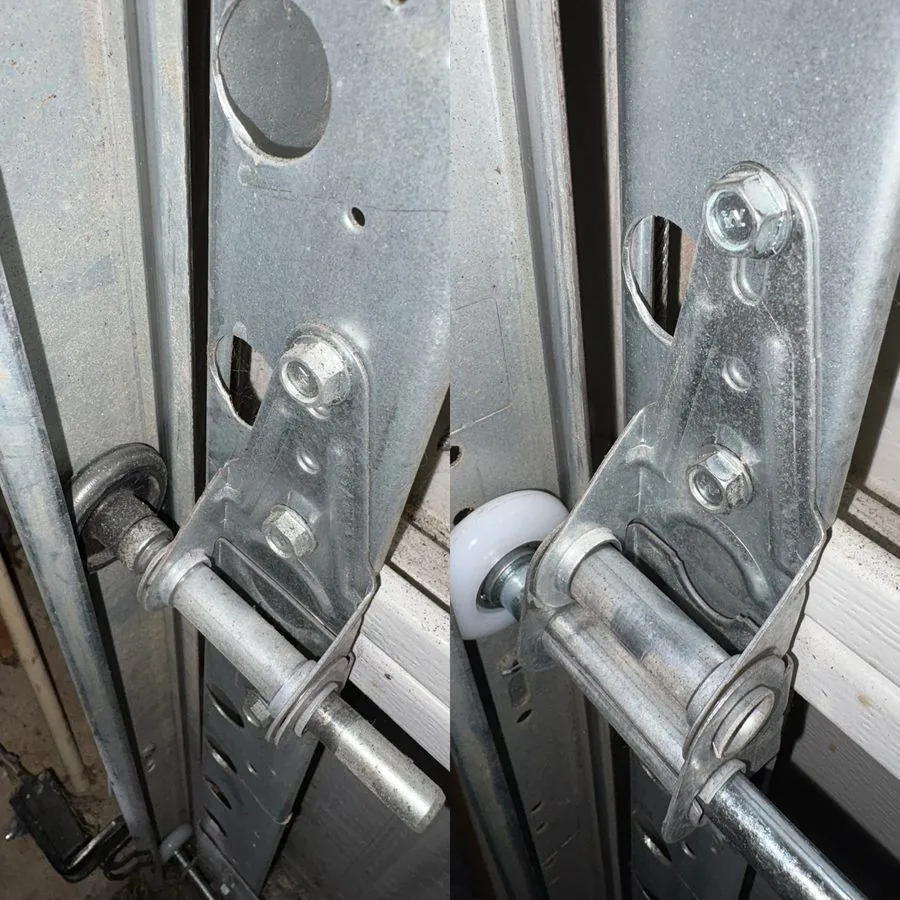
The vibration of thousands of open and close cycles loosens nuts, bolts, and brackets over time. With a socket wrench, go around and tighten every fastener you can see especially the lag bolts holding the track brackets to the wall and the bolts on the hinges between panels. Loose track brackets are one of the most common causes of off-track door calls we get in Austin.
Test Your Safety Sensors
Place a 2x4 flat on the floor in the path of the door and try to close it. The door should reverse immediately on contact with the board. If it does not, the auto-reverse feature is malfunctioning this is a safety requirement, not optional, and it needs immediate professional attention. Also check the photo-eye sensors near the bottom of each track: both LED indicators should be lit solid. A blinking light means the sensors are out of alignment.
How Often to Do Each Task
- Monthly: Balance test, quick visual check of springs and cables
- Every 6 months: Lubricate all moving parts, tighten hardware, test safety sensors
- Every 2 to 3 years in Austin: Replace bottom seal and weatherstripping
- Once a year: Professional tune-up
Related Services
Frequently Asked Questions
Schedule a Professional Tune-Up in Austin
Our Austin team does full inspections, lubrication, balance checks, and safety tests. Same-day appointments available across the Austin metro area.
Call (512) 947-4451