7 Warning Signs Your Garage Door Spring Is About to Break
A broken torsion spring is one of the most common and most dangerous garage door failures. When a spring snaps, your door can become completely inoperable in seconds, leaving your vehicle trapped or your home unsecured. The good news is that springs usually give you warning signs before they fail entirely.
Why Springs Fail and Why Austin Makes It Worse
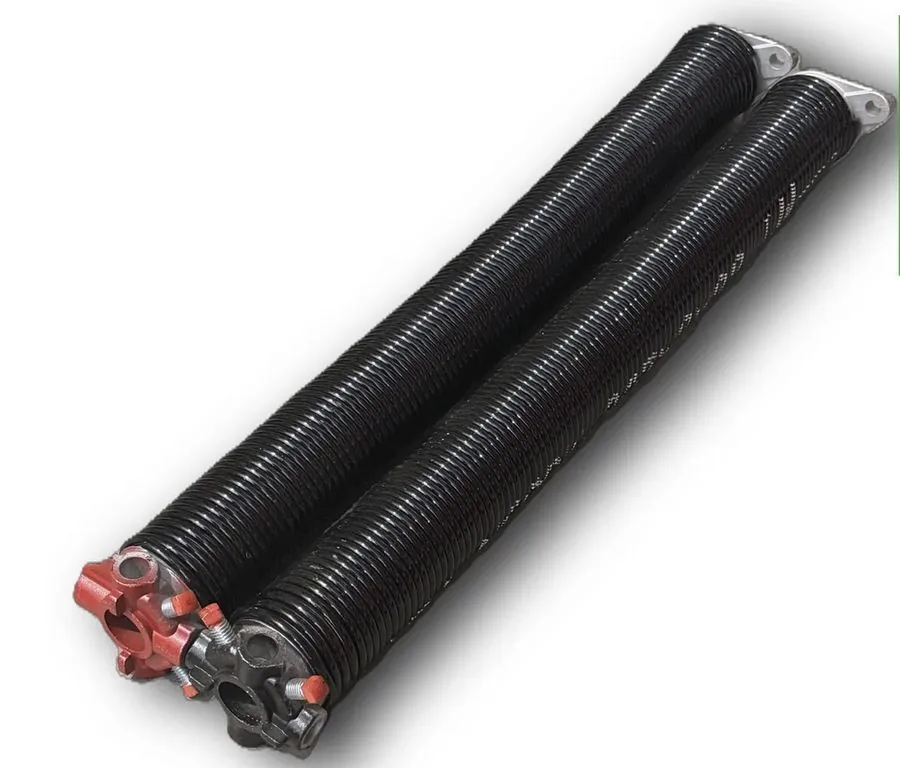
Standard torsion springs are rated for approximately 10,000 cycles. For a household that opens the garage door 4 times a day, that works out to roughly 7 years. But Austin's climate accelerates that timeline. The thermal cycling between summer highs above 100 degrees and winter lows that occasionally dip below freezing stresses metal and causes springs to fatigue faster than the cycle rating suggests. Humidity during spring storm season accelerates corrosion on uncoated springs. We replace springs in Austin more frequently per year than the national average, and most failures cluster in January and February right after the first hard freeze of the season.
The 7 Warning Signs
The Door Feels Unusually Heavy
Springs counterbalance the weight of your garage door. If a spring is weakening or partially broken, the door will feel much heavier than normal when you lift it manually. A properly balanced door should lift easily with one hand. If it takes real effort, that is a red flag. Disconnect the opener and try lifting by hand this is the single fastest way to detect a failing spring before it breaks completely.
You Hear a Loud Bang
When a torsion spring snaps, it makes a sound like a gunshot going off inside the garage. If you hear this and your door will not open afterward, your spring has almost certainly broken. Do not try to operate the door with the opener. Look above the door for a visible gap in the spring coil that confirms it.
There Is a Visible Gap in the Spring
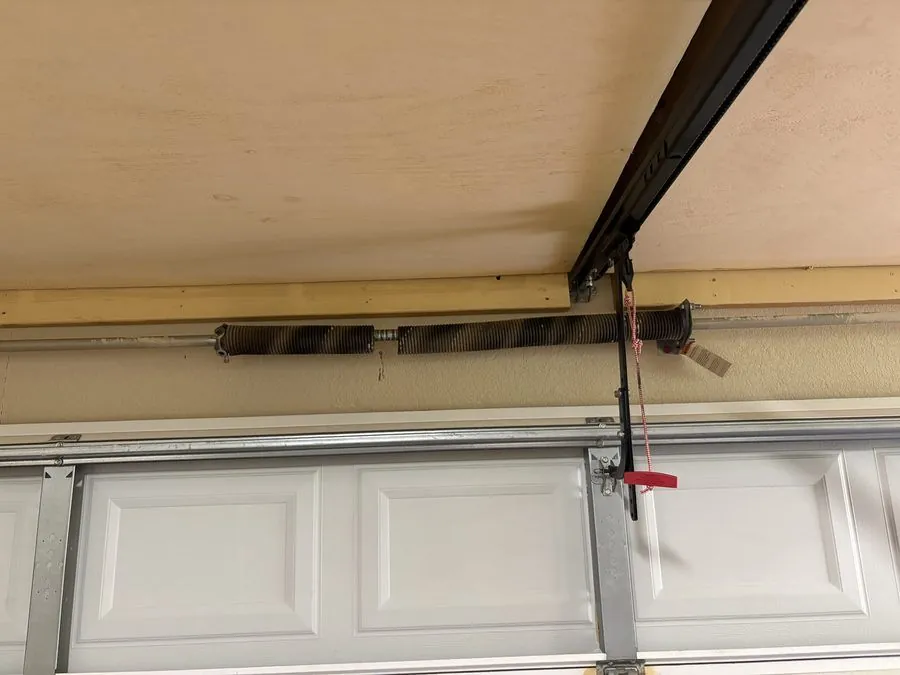
Look at the torsion spring mounted horizontally above your door. A broken spring will have a visible gap in the coil typically 2 inches or more where the metal has separated. If you see this, stop using the door immediately and call for service. This is one of the clearest signs you will ever get that a spring has failed.
The Door Opens Crooked
If one spring fails in a two-spring system, the door will rise unevenly one side will be higher than the other. This asymmetric load puts enormous strain on the cables, tracks, and opener and can cause secondary damage quickly. Do not keep operating an uneven door. The longer it runs in this condition, the more collateral damage accumulates.
The Opener Strains or Fails
Your opener is designed to work with a properly functioning spring system. If the opener sounds like it is struggling, reverses immediately after starting to lift, or triggers its safety stop, a failing spring is often the cause. The opener is not the problem it is detecting that the load is too heavy and stopping to protect itself.
Cables Are Loose or Hanging
Broken springs cause the lift cables to go slack or hang freely on the sides of the door. Loose cables are both a symptom and a danger they can snap or tangle if the door is operated, causing additional damage and potentially causing the door to drop. If you see loose cables, stop using the door.
The Spring Looks Stretched, Spaced, or Corroded
Over time, springs lose tension and the coils spread apart. If the gaps between coils look visibly wider than they used to, the spring is losing tension and approaching end of life. Rust or surface corrosion on the spring coils is also a warning sign in Austin's humidity, uncoated springs corrode faster than in drier climates, and corrosion weakens the metal and accelerates failure.
How Long Do Garage Door Springs Last?
Standard torsion springs are rated for approximately 10,000 cycles roughly 7 years for an average household. High-cycle springs rated for 25,000 to 50,000 cycles are available and significantly extend that timeline. If your springs are approaching 7 years old, it is worth asking about high-cycle replacements when the time comes the cost difference is modest compared to the extra years of service life.
Related Services
Frequently Asked Questions
Suspect a Spring Issue? We Can Help.
Our Austin technicians are available 24/7 for spring inspections and emergency replacements. Do not risk injury let us handle it.
Call (512) 947-4451