The short version: In Austin, springs and rollers tend to give out in the summer heat and during sudden weather swings. Openers get hurt by spring storms, and sensors act up when the sun sits low in spring and fall. This comes from what our technicians see on service calls around town, not from a formal study. Here is what breaks each season, why, and a quick check you can do yourself.
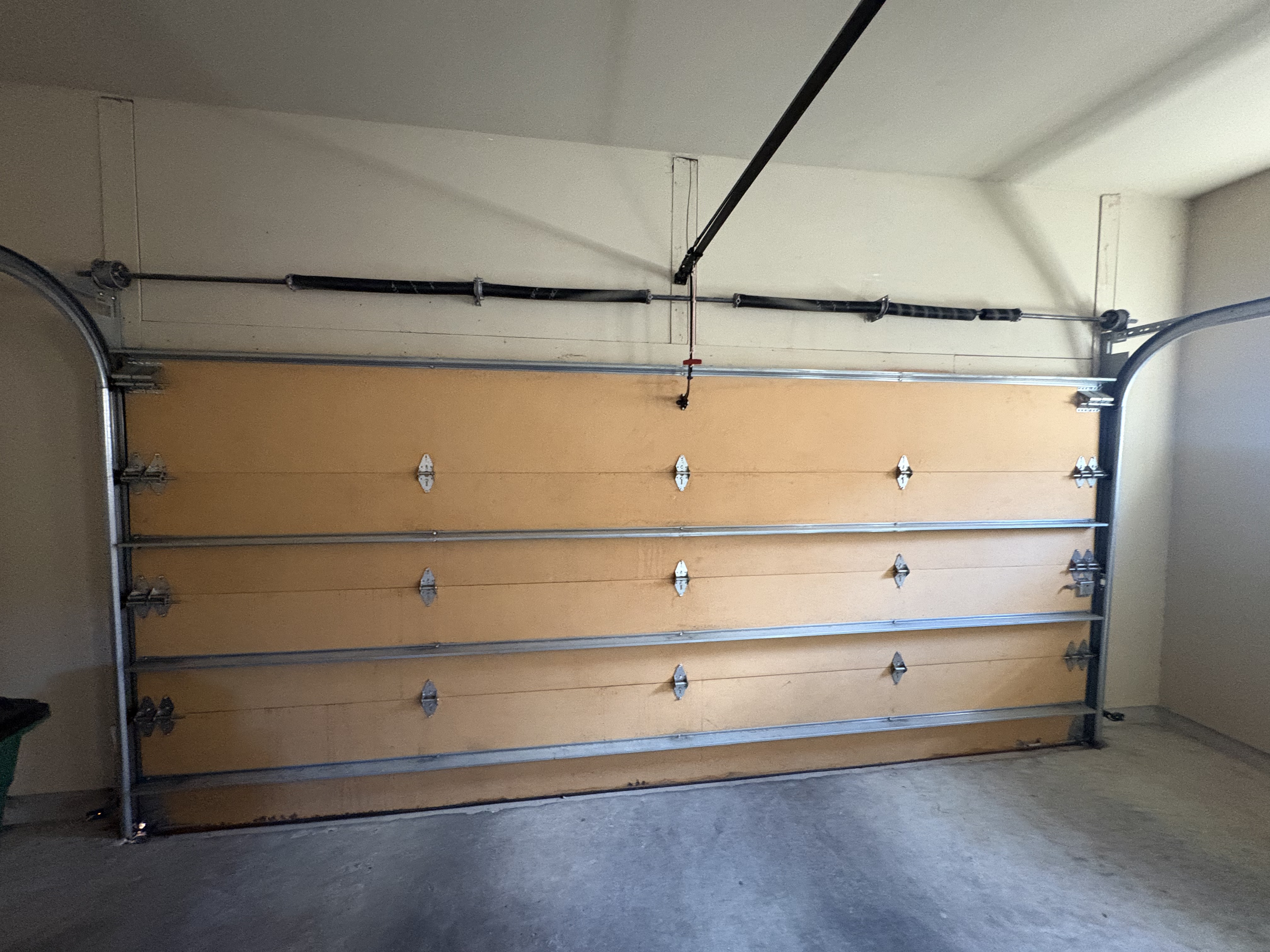
Which Garage Door Parts Fail in Which Season in Austin?
Garage doors don't break at random. Heat, humidity, storms, low sun and sudden temperature swings each hit different parts. Here is how that lines up with the calls we get most. It is our field experience across Austin and nearby cities, and the "why" column is just basic physics.
| Season | What we see most | Why it happens |
|---|---|---|
| Spring (March to May) | Opener and circuit board failures, sensors that act up, rusty springs | Storm power surges, humidity, low sun shining into sensor lenses |
| Summer (June to August) | Broken springs, cracked rollers, hard dried-out seals, sticky doors | Garages that run much hotter than outside, metal expanding and shrinking, UV on rubber and plastic, lubricant drying out |
| Fall (September to November) | Loose hardware, noisy doors, sensor trouble, worn seals letting in rain | Months of expanding and shrinking, low sun angle, aging rubber |
| Winter (December to February) | Springs breaking during cold snaps, brittle seals, stiff doors | Cold stiffens metal and rubber, quick temperature drops, thick grease |
Why Do Garage Door Springs Break in Summer and During Drastic Weather Changes?
The spring does the heavy lifting. It stores the energy that raises your door, and it wears out by use, not by season. Most standard springs are rated for about 10,000 cycles (one open plus one close), and longer-life springs for 20,000 or more. Weather doesn't cause that wear, but it often decides the day a worn spring finally snaps.
- Summer: A garage can get a lot hotter than the air outside, especially with a west-facing door or an attic overhead. Heat dries out lubricant and adds friction, so a tired spring has to work harder until it quits.
- Drastic weather changes: Austin can go from warm to near freezing in a day or two. Metal shrinks as it cools, and the spring and its grease stiffen up. A sudden swing, like the hard freeze during Winter Storm Uri in February 2021, tends to finish off springs that were already close to done.
We wrote more about this in 7 warning signs your spring is about to break.
Why Do Garage Door Openers Fail During Storm Season?
Spring storms in Central Texas bring lightning, brownouts and power surges. Your opener plugs into a ceiling outlet, and the circuit board inside doesn't handle surges well. When it goes, you usually see one of three things: the opener won't respond, it forgets its settings, or the remotes stop working. Humidity can also corrode the terminals and the wall button wiring.
- Plug the opener into a surge protector, or choose a model with battery backup.
- After any outage, run the door all the way up and down once, then lay a board under it to check that it reverses.
- If the opener hums but the door doesn't move, the spring may be the real problem. See our pages on opener repair and the complete opener guide.
Why Do Garage Door Sensors Stop Working at Certain Times of Day?
The safety sensors near the floor send an invisible beam across the opening. In spring and fall the sun sits low enough to shine right into a lens, and the opener reads that as something blocking the door. So the door won't close, or it reverses right away, and it often happens at the same time every day.
- Wipe both lenses and make sure both little lights are solid.
- Shade the sunny sensor with a short cardboard tube or hood.
- If one light is blinking, the sensors are out of line. Our guide on aligning garage door sensors walks through it.
What Happens to Rollers, Seals and Hardware Over an Austin Year?
These are the slow problems. Nobody notices them until something stops working. Plastic rollers crack from UV and heat. Rubber bottom seals go hard and stop touching the floor. Bolts work loose after months of daily expanding and shrinking, and a loose track bracket can eventually put the door off track. We cover seals and how often to replace them in our guide to Austin heat and humidity.
Seasonal Garage Door Checklist for Austin Homeowners
| When | What to check | Time |
|---|---|---|
| Early March | Surge protector on the opener, test the auto-reverse, wipe the sensor lenses | 5 min |
| Late May | Look at the springs for rust, lubricate rollers and hinges, check the bottom seal | 10 min |
| September | Tighten track and hinge bolts, listen for new noises, test the balance with the release cord | 10 min |
| Before a cold snap | Replace brittle seals, lightly lubricate moving parts, and think about replacing a spring that is close to its rated life | 15 min |
A Quick Note on the Numbers
You won't find made-up percentages here. What you read comes from the calls our technicians run in Austin, Round Rock, Cedar Park, Pflugerville, Kyle and nearby cities, plus public facts like standard spring cycle ratings. We have started logging our calls by month and type of failure, and we plan to add real counts to this article in 2027.
Related Services
Frequently Asked Questions
When do garage door springs break most often in Austin?
Why does my garage door opener act up during Texas storms?
Why do my garage door sensors stop working in the afternoon?
How many cycles is a garage door spring rated for?
What is the best time of year for a garage door tune-up in Austin?
Catch the Problem Before It Breaks
A quick seasonal visit can catch a tired spring, a worn seal or a flaky sensor before it leaves your car stuck in the garage. Estimates are free, and we confirm the exact price before any work starts.
Call (512) 947-4451